
Hungary–Ukraine Dispute Escalates Over Seized Bank Convoy as Attacks and Press Threats Rise
Conflicting claims, continued strikes, and growing risks for journalists shape April 8 developments
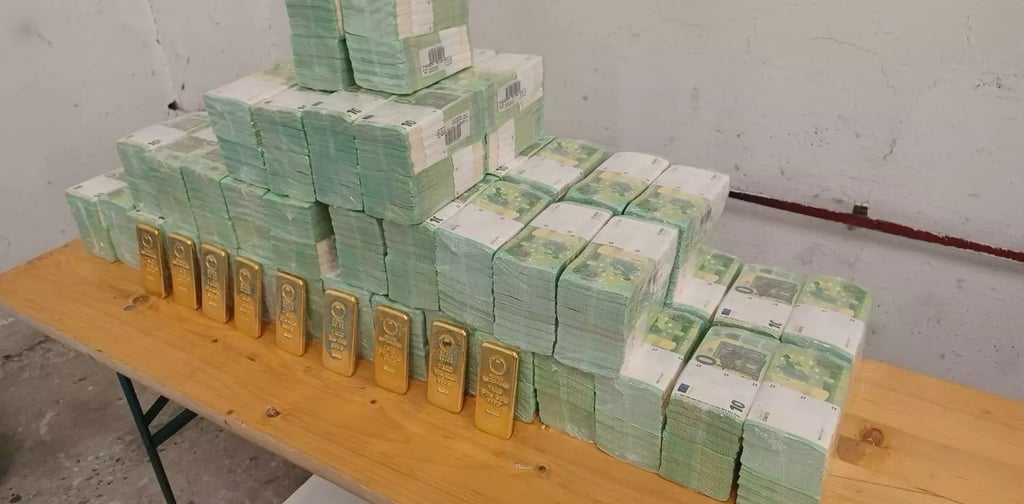
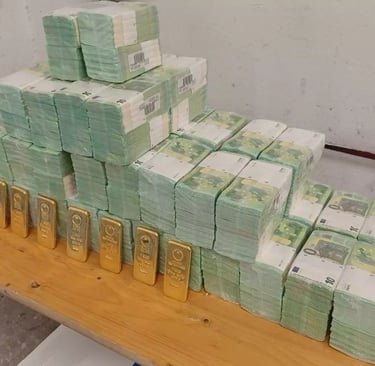
Hungarian authorities announced new findings in the case of a seized Ukrainian bank convoy, claiming evidence of a money laundering operation (операція з відмивання коштів) involving multiple financial institutions. Officials stated that investigators had identified uncirculated currency (неконвертована готівка) and linked it to several banks across different jurisdictions, while also presenting a video allegedly showing document falsification and discussions of illicit payments.
Ukraine’s state-owned bank rejected these claims, describing the materials as manipulated. In its response, the institution pointed to edited audiovisual content (відредагований аудіовізуальний контент) and misleading subtitles (оманливі субтитри) inserted into the footage. The bank stated, “The video contains audio of a conversation between members of the cash collection team. For publication to a Hungarian audience, Hungarian subtitles were added, including a phrase 'corruption money' that does not exist in the audio track.” It added, “It is precisely this deliberately added phrase that forms the basis of (Hungary's) conclusions linking the video to the case of unlawful detention of Oschadbank’s funds.”
The dispute stems from the seizure of two armored vehicles on March 5, which were transporting approximately $82 million in cash and gold. While personnel were released shortly after, Hungarian authorities continue to hold the assets under ongoing investigative procedures (поточні слідчі процедури). Ukrainian representatives have raised concerns about the lack of clarity regarding legal justification (правове обґрунтування) for retaining both institutional and personal property.
The issue has unfolded amid heightened political tensions ahead of Hungary’s parliamentary election. Analysts note that Ukraine has become part of domestic messaging, reflecting broader electoral campaign dynamics (динаміка виборчої кампанії) and the use of foreign policy narratives (зовнішньополітичні наративи) to mobilize support. Separate reports have also raised concerns about alleged external influence and intelligence-sharing risks.
At the same time, Russian forces carried out a large-scale attack on infrastructure in Kharkiv Oblast, striking an oil refinery in Merefa and causing significant structural damage (значні структурні пошкодження). The strike formed part of a wider assault involving dozens of drones and guided aerial bombs targeting multiple settlements. Local officials confirmed damage to residential buildings and vehicles, highlighting the broader impact on civilian infrastructure (цивільна інфраструктура).
Despite the damage, no casualties were reported at the refinery site. A representative stated, “The facility will continue to operate because we have a very large workforce. We will resume operations, but we cannot say how long that will take,” emphasizing the challenges of restoring industrial operations (промислова діяльність) under repeated attacks. The facility has now been struck multiple times since the start of the full-scale invasion.
In parallel, Ukrainian officials responded to the recently announced ceasefire between the United States and Iran, framing it as a model for broader conflict resolution. The foreign minister stated, “American decisiveness works. We believe it is time for sufficient decisiveness to force Moscow to cease fire and end its war against Ukraine.” Leadership in Kyiv described the agreement as a step toward reducing destruction and preserving energy infrastructure stability (стабільність енергетичної інфраструктури).
President Volodymyr Zelensky also commented on the development, stating, “Ukraine has always called for a ceasefire in the war waged by Russia here in Europe against our state and our people.” He added, “Ukraine tells Russia once again: we are ready to respond in kind if the Russians stop their strikes.” Previous proposals included reciprocal limitations on attacks targeting energy systems, though these initiatives have not been accepted.
Concerns over press safety have also intensified. Data from Ukraine’s National Union of Journalists indicates a sharp rise in attacks on media workers (напади на журналістів) and threat incidents (випадки погроз) in 2025. A total of 160 cases have been recorded so far this year, including numerous instances involving damaged equipment and destroyed property.
The number of journalists killed since the beginning of the invasion has increased significantly, with at least 147 fatalities reported. Of these, a portion occurred while individuals were performing professional duties, underscoring the risks associated with conflict reporting (висвітлення конфлікту) and frontline coverage. Additional cases include journalists held in captivity, reflecting ongoing concerns about freedom of the press (свобода преси).
Union representatives warned that visible press markings may increase danger in combat zones. One official stated, "Any ‘Press’ marking makes a journalist a live target," highlighting the tension between international safety standards and operational security realities (реалії оперативної безпеки) on the ground.
Overall, developments on April 8 illustrate the convergence of legal disputes, military escalation, diplomatic positioning, and media safety concerns. These overlapping factors continue to shape the evolving landscape of the war and its broader regional implications.
Hungary Seizes $80 Million in Cash and Gold From Ukrainian Bank Convoy.
Learn the official language of Ukraine in 30 days thanks to the most complete grammar, vocabulary and culture course available.
Start speaking Ukrainian today!


For requests or suggestions: pr@ukrainian-institute.com
© Copyright 2026 Ukrainian Institute
Support Ukraine in its fight for Freedom: