Neutrality Doesn’t Mean Indifference: Austria Joins Tribunal to Prosecute Russia’s Aggression
Vienna expands support for accountability efforts as international legal pressure on Russia grows
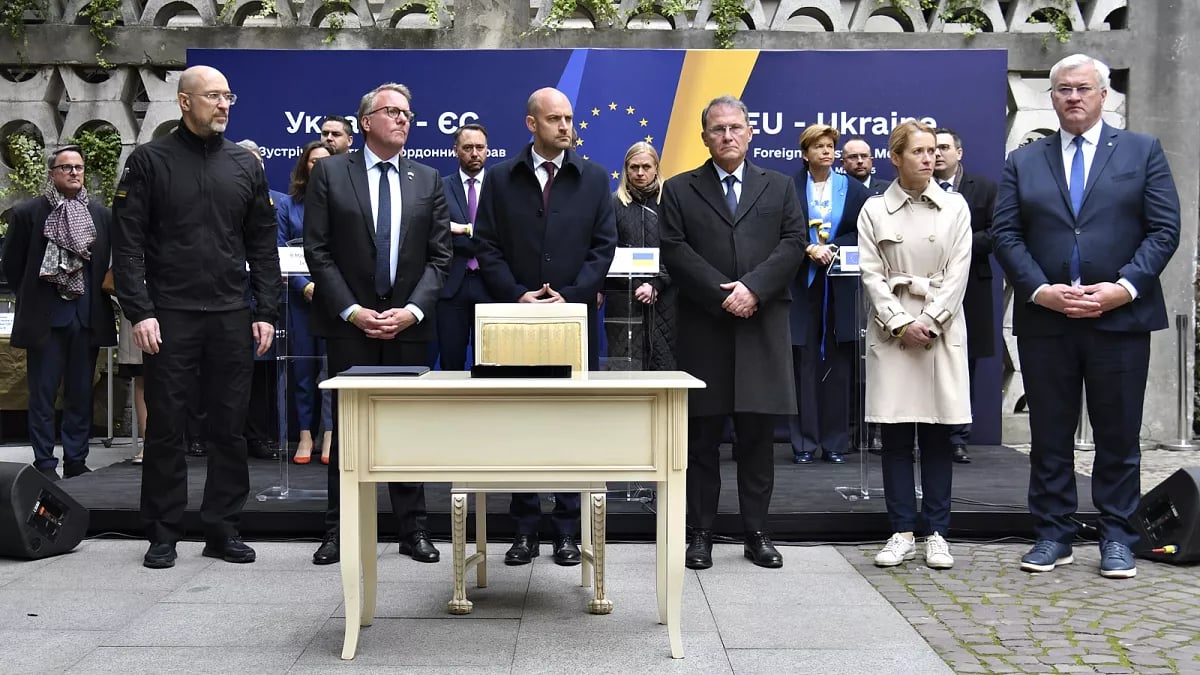
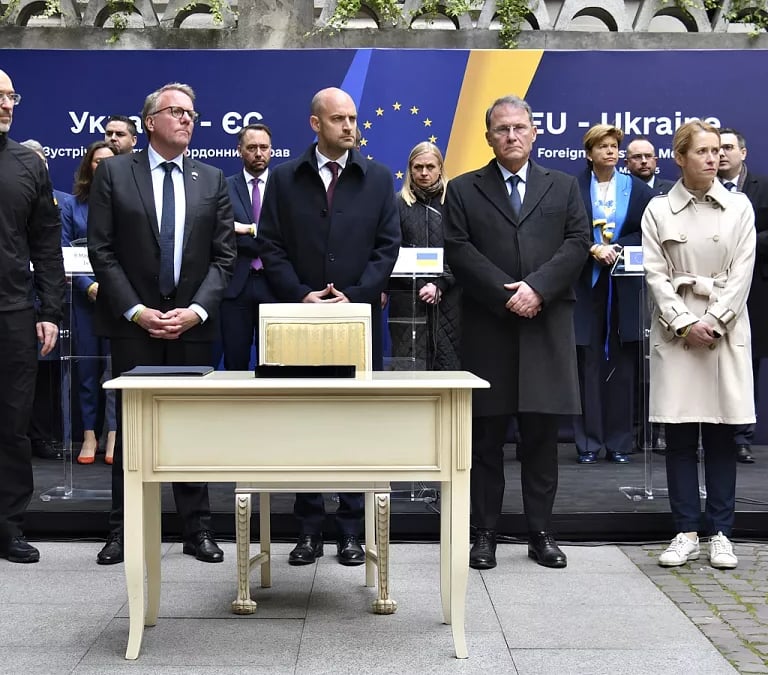
Austria has joined the coalition supporting the Special Tribunal for the Crime of Aggression against Ukraine, becoming the 20th participating state, with 19 of them members of the Council of Europe. This step reinforces the growing international backing for legal accountability mechanisms (механізми правової відповідальності) [mekhanizmy pravovoi vidpovidalnosti] aimed at addressing the consequences of Russia’s actions. Ukrainian Foreign Minister Andrii Sybiha confirmed the development and emphasized its significance for advancing international justice efforts (міжнародні зусилля правосуддя) [mizhnarodni zusyllia pravosuddia].
Sybiha expressed appreciation for Austria’s decision and directly acknowledged Austrian Foreign Minister Beate Meinl-Reisinger. "I am grateful to Austria and my colleague [Beate Meinl-Reisinger] for once again proving that neutrality does not mean indifference. To the contrary, accountability is critical to ensure a lasting peace on our continent," he wrote on X. His statement highlights the broader principle that neutral foreign policy (нейтральна зовнішня політика) [neitralna zovnishnia polityka] does not exclude participation in efforts to uphold rule of law principles (принципи верховенства права) [pryntsypy verkhovenstva prava].
Austria’s accession follows similar moves by Iceland and Poland, which brought the number of supporting states to the minimum threshold required for initiating a formal vote on activating the tribunal. With Austria joining, the coalition now exceeds that threshold, strengthening the political consensus building (формування політичного консенсусу) [formuvannia politychnoho konsensusu] necessary to move from planning to implementation. This expansion reflects increasing alignment among European states regarding the need for collective legal action (колективні юридичні дії) [kolektyvni yurydychni dii].
The Special Tribunal was established through an agreement between Ukraine and the Council of Europe, signed by President Volodymyr Zelenskyy on June 25, 2025, and later ratified by Parliament on July 15. Its creation addresses a limitation within the International Criminal Court, which can prosecute war crimes, crimes against humanity, and genocide, but lacks jurisdiction over the crime of aggression definition (визначення злочину агресії) [vyznachennia zlochynu ahresii] under current conditions. This institutional gap made the tribunal necessary to ensure that senior leadership responsibility is not left unaddressed within the broader international legal framework (міжнародна правова система) [mizhnarodna pravova systema].
The tribunal has the authority to investigate and prosecute senior Russian and Belarusian officials, potentially even in their absence. However, it operates within constraints imposed by international law, including immunity protections for sitting heads of state, which means that certain individuals cannot be prosecuted while in office. Despite these limitations, the tribunal contributes to Ukraine’s strategy of applying legal pressure strategy (стратегія правового тиску) [stratehiia pravovoho tysku] and formalizing accountability rather than relying solely on political declarations.
Russia has responded by warning that countries joining the initiative may face "restrictive measures," describing participation as a "hostile move." Austria’s decision is particularly notable because it comes from a country that maintains a policy of neutrality, thereby testing the boundaries of diplomatic risk assessment (оцінка дипломатичних ризиків) [otsinka dyplomatychnykh ryzykiv] and signaling that neutrality does not preclude engagement in international accountability processes (міжнародні процеси відповідальності) [mizhnarodni protsesy vidpovidalnosti].
Austria’s support for Ukraine extends beyond legal initiatives. Since the start of Russia’s full-scale invasion in February 2022, Vienna has provided over €320 million in bilateral financial and humanitarian aid. This assistance reflects a broader commitment to humanitarian assistance programs (програми гуманітарної допомоги) [prohramy humanitarnoi dopomohy] and post-war recovery support (підтримка післявоєнного відновлення) [pidtrymka pisliavoiennoho vidnovlennia]. In February 2026, Austria allocated an additional €14.1 million specifically for humanitarian demining and reconstruction efforts, further demonstrating its expanding role.
Austrian officials have also indicated readiness to host a future Ukraine reconstruction conference in Vienna, signaling deeper involvement in long-term recovery planning. Such initiatives align with broader European efforts to coordinate rebuilding strategies and ensure sustainable development following the conflict. The continued expansion of the coalition supporting the tribunal suggests that justice enforcement mechanisms (механізми забезпечення правосуддя) [mekhanizmy zabezpechennia pravosuddia] are becoming a central component of the international response.
Each new country joining the coalition increases diplomatic pressure on those that have not yet taken a position. Sybiha noted that every additional participant "confirms that justice for the crime of aggression against Ukraine is inevitable." This growing momentum underscores the importance of unified international action in addressing violations of sovereignty and maintaining long-term stability across Europe through collective security frameworks (системи колективної безпеки) [systemy kolektyvnoi bezpeky].
Key Ukrainian Vocabulary
механізми правової відповідальності [mekhanizmy pravovoi vidpovidalnosti] legal accountability mechanisms
міжнародні зусилля правосуддя [mizhnarodni zusyllia pravosuddia] international justice efforts
нейтральна зовнішня політика [neitralna zovnishnia polityka] neutral foreign policy
принципи верховенства права [pryntsypy verkhovenstva prava] rule of law principles
формування політичного консенсусу [formuvannia politychnoho konsensusu] political consensus building
колективні юридичні дії [kolektyvni yurydychni dii] collective legal action
визначення злочину агресії [vyznachennia zlochynu ahresii] crime of aggression definition
міжнародна правова система [mizhnarodna pravova systema] international legal framework
стратегія правового тиску [stratehiia pravovoho tysku] legal pressure strategy
оцінка дипломатичних ризиків [otsinka dyplomatychnykh ryzykiv] diplomatic risk assessment
міжнародні процеси відповідальності [mizhnarodni protsesy vidpovidalnosti] international accountability processes
програми гуманітарної допомоги [prohramy humanitarnoi dopomohy] humanitarian assistance programs
підтримка післявоєнного відновлення [pidtrymka pisliavoiennoho vidnovlennia] post-war recovery support
механізми забезпечення правосуддя [mekhanizmy zabezpechennia pravosuddia] justice enforcement mechanisms
системи колективної безпеки [systemy kolektyvnoi bezpeky] collective security frameworks
Europe approves creation of tribunal to judge 'crimes of aggression' committed by Russia in Ukraine.
Learn the official language of Ukraine in 30 days thanks to the most complete grammar, vocabulary and culture course available.
Start speaking Ukrainian today!
For requests or suggestions: pr@ukrainian-institute.com
© Copyright 2026 Ukrainian Institute
Support Ukraine in its fight for Freedom: