
Polish Volunteer Describes Personal Transformation and Combat Experience in Ukraine’s Armed Forces
Foreign fighter recounts frontline service, motivations, and the role of unit cohesion in survival during ongoing war
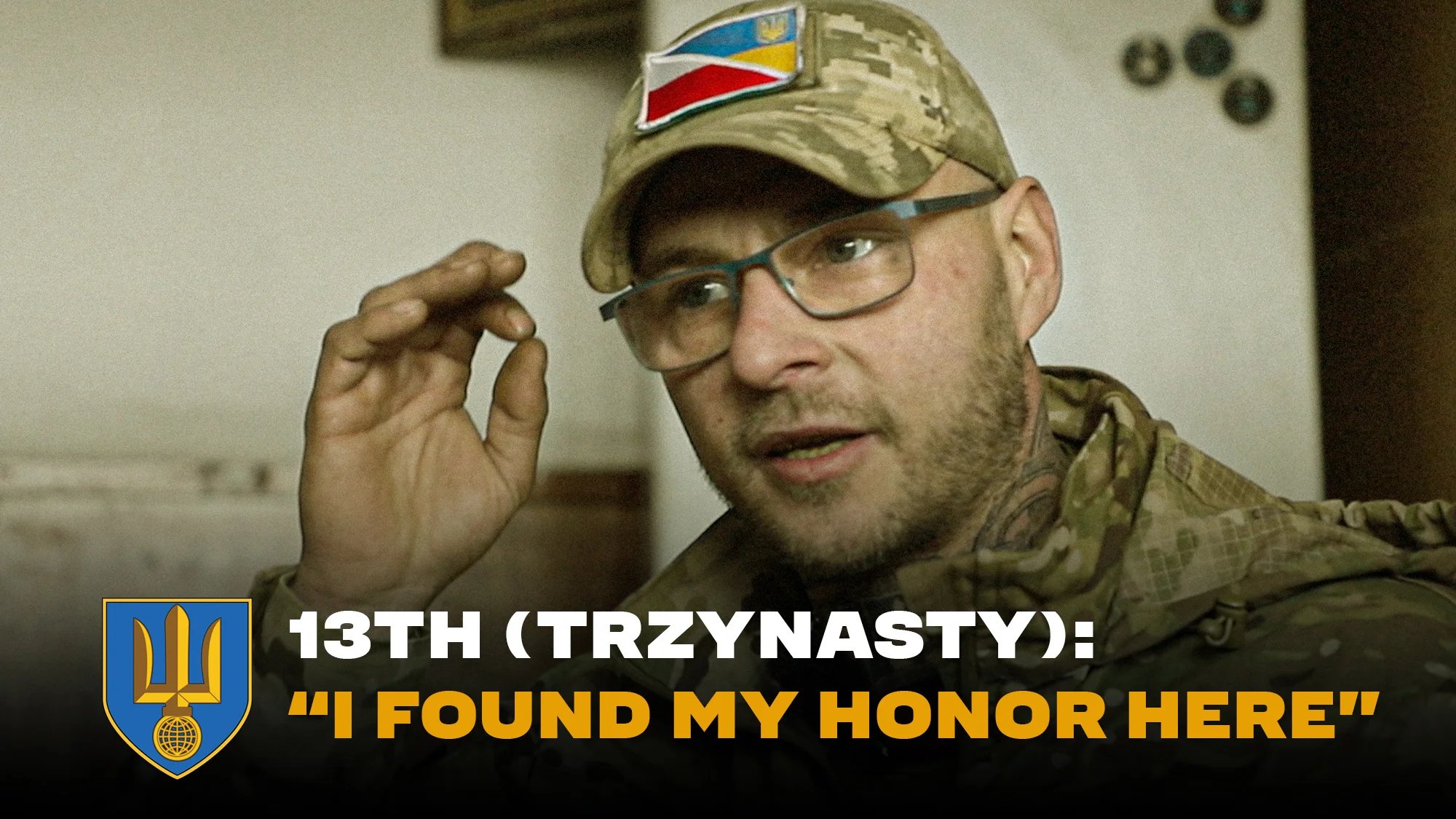
A Polish volunteer fighting in Ukraine’s Armed Forces described his experience as a journey shaped by personal transformation (особиста трансформація) [osobysta transformatsiia] and a search for meaning. Known by the call sign “Thirteenth,” he joined the conflict without prior military background and became part of the International Legion, where he underwent training and adapted to the realities of combat deployment (бойове розгортання) [boiove rozghortannia].
He stated, “I came here to change something in my life. Before that, I had no combat experience. But I went through solid training here and began fighting shoulder to shoulder with great people.” His experience reflects how individuals without prior service can transition into active roles through structured military training (військова підготовка) [viiskova pidhotovka] and integration into operational units.
Before joining the military, he worked in various professions, including construction and mechanical trades. These skills became relevant in the field, particularly in building defensive positions such as dugouts. This highlights the importance of practical field skills (практичні польові навички) [praktychni poliovi navychky] in modern warfare, where adaptability and technical abilities contribute to survival and operational effectiveness.
The volunteer first arrived in Ukraine in 2022 and later officially joined the International Legion in 2023. Since then, his involvement has been continuous, with only occasional breaks between rotations. He explained the need for recovery after prolonged exposure to combat, pointing to the psychological impact of sustained frontline operations (тривалі бойові дії на передовій) [tryvali boiovi dii na peredovii].
Reflecting on his return home during a break, he described the support he received from his community, noting that his actions are perceived as contributing not only to Ukraine’s defense but also to broader regional security. This perspective aligns with concerns about regional security threats (регіональні загрози безпеці) [rehionalni zahrozy bezpetsi] linked to ongoing military aggression.
Beyond combat, he maintains personal interests such as painting and sculpture, though he noted that training has become his primary focus. This balance illustrates how individuals in conflict zones continue to engage in personal development activities (заняття для особистого розвитку) [zaniattia dlia osobystoho rozvytku], even under extreme conditions.
He emphasized that survival in combat depends on speed, awareness, and constant movement, stating, “The enemy wants to kill you first. So you have to move fast, change positions quickly.” This reflects the tactical necessity of rapid maneuvering (швидке маневрування) [shvydke manevruvannia] in response to immediate threats on the battlefield.
Describing one of his recent missions, he highlighted the physical and mental demands, including significant weight loss and exhaustion. He credited survival to teamwork and effective evacuation, underlining the importance of coordinated operations (скоординовані операції) [skoordinovani operatsii] and logistical support in high-risk environments.
He repeatedly stressed the importance of trust and unity within his unit, describing fellow soldiers as family. This underscores the role of unit cohesion (згуртованість підрозділу) [zhurtovanist pidrozdilu] in maintaining morale and ensuring operational success during prolonged engagements.
The volunteer also issued a message encouraging others to take the conflict seriously, emphasizing the broader implications of the war. He called for commitment and responsibility, highlighting the need for individuals who demonstrate dedication rather than seeking temporary involvement. This reflects the importance of long-term commitment (довгострокова відданість) [dovhostrokova viddanist] in military service.
Looking ahead, he expressed acceptance of uncertainty while finding purpose in his role. He stated, “We don’t know what will happen next. That’s why I am here. I found my God here. I found my country here. I found my honor here.” His remarks illustrate how individuals interpret their participation through the lens of personal conviction (особисте переконання) [osobyste perekonannia], shaping their motivation to remain engaged in the conflict.
Key Ukrainian Vocabulary
особиста трансформація [osobysta transformatsiia] personal transformation
бойове розгортання [boiove rozghortannia] combat deployment
військова підготовка [viiskova pidhotovka] military training
практичні польові навички [praktychni poliovi navychky] practical field skills
тривалі бойові дії на передовій [tryvali boiovi dii na peredovii] sustained frontline operations
регіональні загрози безпеці [rehionalni zahrozy bezpetsi] regional security threats
заняття для особистого розвитку [zaniattia dlia osobystoho rozvytku] personal development activities
швидке маневрування [shvydke manevruvannia] rapid maneuvering
скоординовані операції [skoordinovani operatsii] coordinated operations
згуртованість підрозділу [zhurtovanist pidrozdilu] unit cohesion
довгострокова відданість [dovhostrokova viddanist] long-term commitment
особисте переконання [osobyste perekonannia] personal conviction
"I Found My Honor Here” – Thirteenth, a Polish Volunteer in the Ranks of the Armed Forces of Ukraine.
Learn the official language of Ukraine in 30 days thanks to the most complete grammar, vocabulary and culture course available.
Start speaking Ukrainian today!
For requests or suggestions: pr@ukrainian-institute.com
© Copyright 2026 Ukrainian Institute
Support Ukraine in its fight for Freedom: