
Ukraine Restores Nearly Half of Power Generation Destroyed by Russia
Recovery efforts continue as energy sector faces ongoing attacks
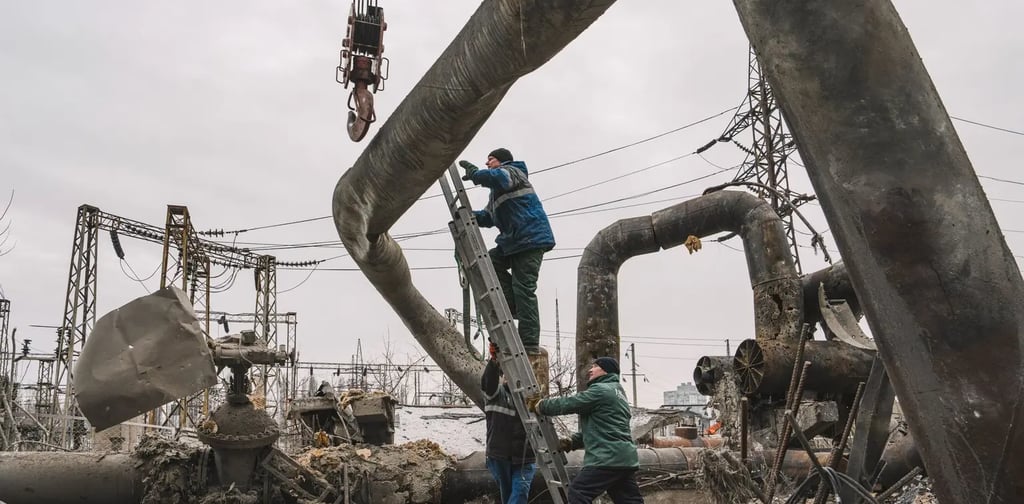
Russian forces destroyed 9 gigawatts of Ukraine’s power generation, but the country has already managed to rebuild 4 gigawatts, Energy Minister Denys Shmyhal said on April 4. This recovery highlights Ukraine’s rapid restoration (відновлення) of critical infrastructure despite wartime conditions.
During one of the most intense campaigns of the war, Russian drones and missiles struck thermal, combined heat and power, and hydroelectric plants. These attacks caused widespread outages, leaving millions without heating and electricity during sub-arctic temperatures, creating a severe humanitarian crisis (криза).
Ukraine’s peak winter energy consumption is around 18 gigawatts, meaning that roughly half of its capacity was destroyed. By January, the country’s generation capacity had dropped to approximately 11 gigawatts, reflecting the scale of the devastation (спустошення).
Repair efforts have been ongoing since the beginning of the attacks in the fall. More than 14,000 energy workers have restored 85% of thermal power plant capacity and 66% of hydroelectric generation, while also repairing transformers and key systems. These efforts demonstrate significant operational resilience (стійкість).
At the same time, Ukraine is expanding distributed energy systems and increasing storage capacity to strengthen its energy network. This shift represents a strategic adaptation (адаптація) to ongoing threats.
Due to the damage, Ukraine was forced to import electricity from neighboring countries such as Hungary, Romania, and Slovakia. The country expanded its import capacity with the European Union in January and imported 3.6 billion kilowatt-hours between December and February, reflecting growing regional integration (інтеграція).
In addition, Ukraine imported 4.6 billion cubic meters of natural gas after more than half of its domestic gas production capacity was destroyed. This underscores the country’s dependence on external energy supply (постачання) during the crisis.
International partners provided substantial support through the Energy Ramstein initiative, with over 40 countries supplying generators, transformers, and other equipment. They also contributed more than 602.5 million euros to the Ukraine Energy Support Fund, reinforcing global solidarity (солідарність).
Despite these efforts, Russia continues to target Ukraine’s energy sector. The state-owned company Naftogaz was attacked again on April 4, with drone strikes targeting facilities in the Poltava region. The company has reportedly been hit more than 40 times this year, highlighting ongoing vulnerability (вразливість).
Energy leaders have urged the government to accelerate preparations for the next winter. Officials stress the need for clear planning, funding, and procurement of critical equipment, as production timelines can take up to a year. Ukraine’s domestic manufacturing capacity is also limited by a reduced workforce, posing additional logistical challenges (виклики).
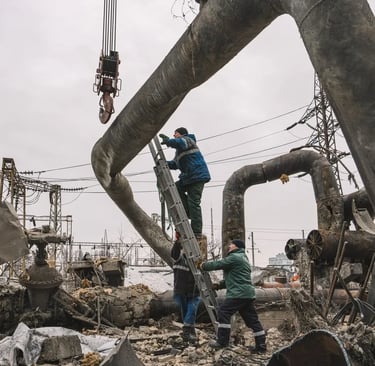
Workers clear damaged pipework at the Darnytsia Thermal Power Plant following Russian air strikes.
Learn the official language of Ukraine in 30 days thanks to the most complete grammar, vocabulary and culture course available.
Start speaking Ukrainian today!
For requests or suggestions: pr@ukrainian-institute.com
© Copyright 2026 Ukrainian Institute
Support Ukraine in its fight for Freedom: