
Ukrainian Strikes Reduce Russia’s Black Sea Missile Fleet Capacity
Damage to key vessels limits Kalibr launch capability and alters naval strike potential
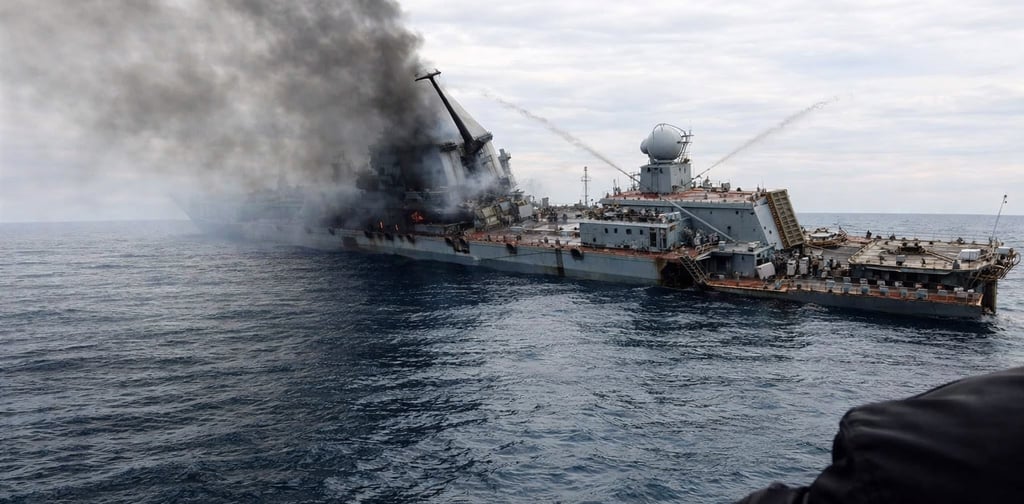
Recent Ukrainian strikes have significantly reduced Russia’s ability to launch cruise missile attacks (крейсерські ракетні удари) from the Black Sea, targeting vessels equipped with Kalibr systems. According to military analysis, only a limited number of platforms capable of deploying these missiles remain operational, reflecting a decline in naval strike capacity (ударний потенціал флоту).
Two key frigates, Admiral Essen and Admiral Makarov, were struck in March and April, leaving both unable to carry out effective combat operations. One vessel reportedly lost targeting capability, while the other sustained damage to its launch systems, rendering it unable to deploy missiles. This has weakened Russia’s surface fleet effectiveness (ефективність надводного флоту) and reduced its operational flexibility in the region.
Military experts emphasized that combining damaged vessels to compensate for losses is not feasible under current conditions. As one analyst stated, “To mold one out of two… that will not happen, because it is unthinkable in modern conditions.” The risk of deploying compromised ships would expose them to further strikes, increasing vulnerability within open-sea combat environments (умови бойових дій у відкритому морі).
In addition to frigate losses, Russia’s submarine capabilities in the Black Sea have also been affected. Only one submarine remains fully operational, while another has been damaged and is no longer combat-ready. This further limits Russia’s underwater strike capability (підводна ударна спроможність) and reduces redundancy in missile delivery systems.
The remaining operational assets include a small number of missile ships equipped with similar launch systems, each capable of carrying a limited number of missiles. However, these platforms alone are insufficient to maintain previous levels of strategic strike pressure (стратегічний ударний тиск) on Ukrainian targets.
The attacks were carried out by Ukrainian unmanned systems in coordination with security services, demonstrating the growing role of integrated strike operations (інтегровані ударні операції) and precision targeting. The operation against Admiral Makarov involved multiple strikes, with damage reported near missile launch systems and other structural areas.
While some of the damage may not fully disable all onboard systems, repeated strikes increase the likelihood of cumulative degradation. This contributes to long-term platform reliability issues (проблеми надійності платформи) and limits the ship’s readiness for sustained operations.
Earlier strikes had already impacted other vessels in the same class, leaving only a small number of missile-capable ships available in the Black Sea. Analysts note that one additional frigate has not been present in the region for several years, further narrowing Russia’s available naval asset pool (резерв військово-морських засобів).
The reduction in available launch platforms is expected to affect Russia’s ability to conduct large-scale missile strikes from the sea. This shift may force greater reliance on alternative delivery systems, such as aerial or ground-based platforms, altering the balance of multi-domain strike strategies (багатодоменні ударні стратегії).
Overall, the damage inflicted on key naval assets highlights the effectiveness of Ukrainian targeting efforts and underscores the evolving nature of maritime warfare in the conflict.
Russian Troop Movements in Transnistria.
Learn the official language of Ukraine in 30 days thanks to the most complete grammar, vocabulary and culture course available.
Start speaking Ukrainian today!


For requests or suggestions: pr@ukrainian-institute.com
© Copyright 2026 Ukrainian Institute
Support Ukraine in its fight for Freedom: